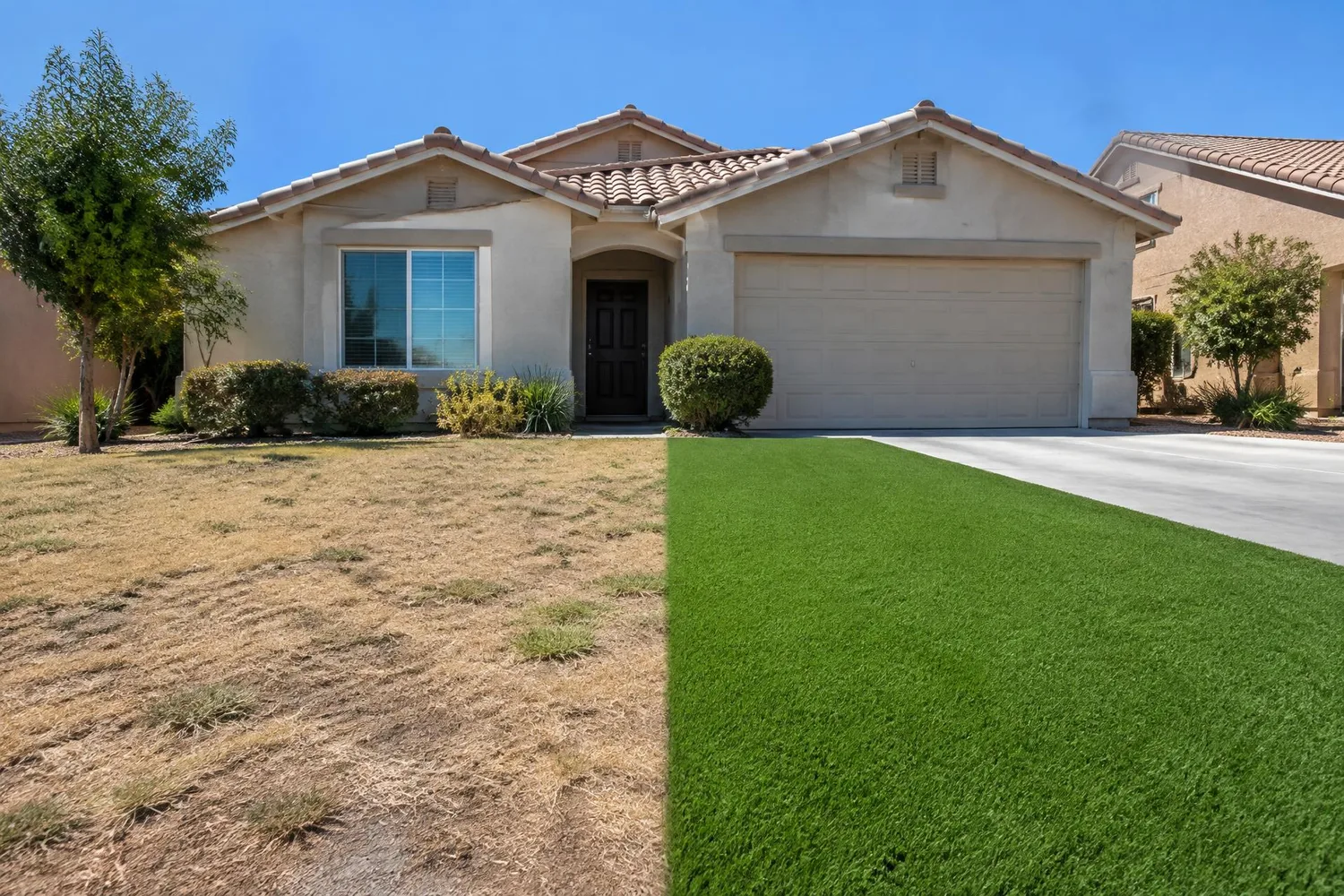
Every summer in San Bernardino and Riverside, the same thing happens to natural lawns: the temperature climbs past 100°F, the water bill climbs with it, and the grass still turns brown in patches. It's no surprise that more homeowners in the Inland Empire are switching to synthetic grass. Here's what the switch really changes.
Water. Outdoor irrigation is the biggest share of most households' water use in Southern California, and a lawn is the thirstiest part of the yard. A synthetic lawn needs no irrigation at all — an occasional rinse for dust or pets is all it takes. Many local water agencies also run turf-replacement rebate programs, so check with yours before you start.
Time and upkeep. No mowing, edging, fertilizing, aerating or reseeding. Maintenance comes down to clearing leaves with a blower and brushing high-traffic areas now and then so the blades stay upright.
Looks. A good synthetic lawn looks green and even all year, including in August and after a cold snap. Modern turf uses a mix of blade colors and a brown 'thatch' layer so it reads as real grass, not a carpet.
Where installs go wrong. The turf is only as good as what's under it. Skimping on the base is the most common mistake we see: turf laid over loose dirt sinks, ripples and holds puddles within a year. A proper install removes the old grass and roots, builds and compacts a base with a drainage slope, adds weed barrier (and a gopher barrier if you have them), and finishes with infill brushed in so the blades stand up.
Is it right for you? If you want a yard that's green all year, saves water and doesn't eat your weekends, synthetic grass is hard to beat. If you love gardening in the lawn itself, a mix of turf, decorative rock and planters can give you the best of both.
MP Synthetic Grass installs synthetic lawns across San Bernardino, Riverside, Fontana, Ontario, Corona and the rest of the Inland Empire. Call (562) 305-6845 for a free estimate — in English or Spanish.